Box Packaging Company | Xiamen Hengxing Color Printing
Choosing a box packaging company should begin with evidence, not with the size of a portfolio, a broad capability statement, or an attractive quotation. A buyer needs to confirm that the supplier’s documented packaging scope is relevant to the project, then build a traceable path from the initial concept through evidence review, samples, revisions, approval, and production expectations.
Xiamen Hengxing Color Printing Co., Ltd., located at No.6 Yanghe South Rd, Xinyang Industrial Area, Haicang District, Xiamen, Fujian, China 361026, is documented as a China-based custom paper packaging manufacturer operating under the HENGXING brand. Its documented scope includes custom paper boxes, rigid gift boxes, paper bags, magnetic closure boxes, drawer boxes, lid-and-base boxes, mailer boxes, paper tubes, and related packaging accessories.
Reference Standard: Relevant material and performance testing standards should be selected only after the final box construction, materials, packed product, distribution conditions, and performance requirements have been defined.

Confirm What a Box Packaging Company Actually Handles
A broad search result or company description can establish a starting point, but it should not be treated as proof of every possible packaging capability.
The first evaluation task is to separate documented packaging scope from assumptions.
For example, evidence that a company works with magnetic closure boxes, drawer boxes, lid-and-base boxes, mailer boxes, paper tubes, or rigid gift boxes can establish that those packaging categories belong within the supplier’s documented portfolio. It does not automatically establish a particular board grade, insert material, production tolerance, print process, certification, testing program, order quantity, lead time, load capacity, or durability level.
That distinction matters because two buyers may use the same phrase, such as “custom gift box,” while expecting very different results. One project may prioritize presentation and an opening sequence. Another may require compact shipping, repeated access, product separation, or a specific artwork layout. A general portfolio can indicate relevance, but it cannot replace a project definition.
Before discussing a quotation, establish at least these project boundaries:
- The product or products that will be packed.
- The intended box structure or the structures still being considered.
- The physical product dimensions or actual product samples available for review.
- The desired presentation and opening experience.
- Artwork, branding, labeling, and information requirements.
- The expected use context, such as retail display, gifting, storage, shipment, or repeated access.
- The decisions that still require physical verification.
This approach also prevents a common sourcing problem: treating a structure name as a complete specification. A “drawer box” identifies a general format, while the actual project still requires decisions about dimensions, internal arrangement, graphics, finishing expectations, and other project-specific details.
Buyers reviewing custom paper packaging options should therefore use supplier scope as the beginning of qualification rather than the end of it.
Ask for Evidence That Matches Your Packaging Project
A large image gallery can be useful for inspiration, but the strongest evidence is evidence that addresses the buyer’s actual packaging question.
Start by creating a short project definition. It does not need to be a complete production specification at the first discussion, but it should give the prospective supplier enough context to respond meaningfully.
If the buyer is evaluating a magnetic closure gift box, for example, evidence concerning unrelated mailer packaging may demonstrate broader experience but may not resolve the buyer’s most important decisions. The buyer should instead ask what relevant examples, physical samples, drawings, visual mockups, or other project-appropriate references can be reviewed.
The goal is relevance rather than volume.
A practical evidence request can be organized around four layers.
| Evaluation layer | Buyer should define | Useful evidence to request |
|---|---|---|
| Packaging direction | Intended box format and use | Relevant examples or comparable structures |
| Product fit | Packed item, orientation, dimensions, or samples | Drawing, mockup, sample, or fit-related review material |
| Présentation | Opening experience, branding, visible surfaces | Artwork views, representative samples, or presentation references |
| Approval path | Decisions requiring review before production | Sample or proof stages and revision records |
This table is not a universal manufacturing procedure. The appropriate evidence depends on the project and the decisions that need to be made.
A buyer should also watch for answers that remain too general. Statements such as “we can customize it” or “many options are available” may be useful as conversation starters, but they do not yet establish what has actually been defined for the project.
More useful responses connect the supplier’s evidence to the buyer’s brief. That may mean identifying a relevant box format, explaining what information is still needed, showing an appropriate reference, or clarifying what a sample or mockup can and cannot confirm.
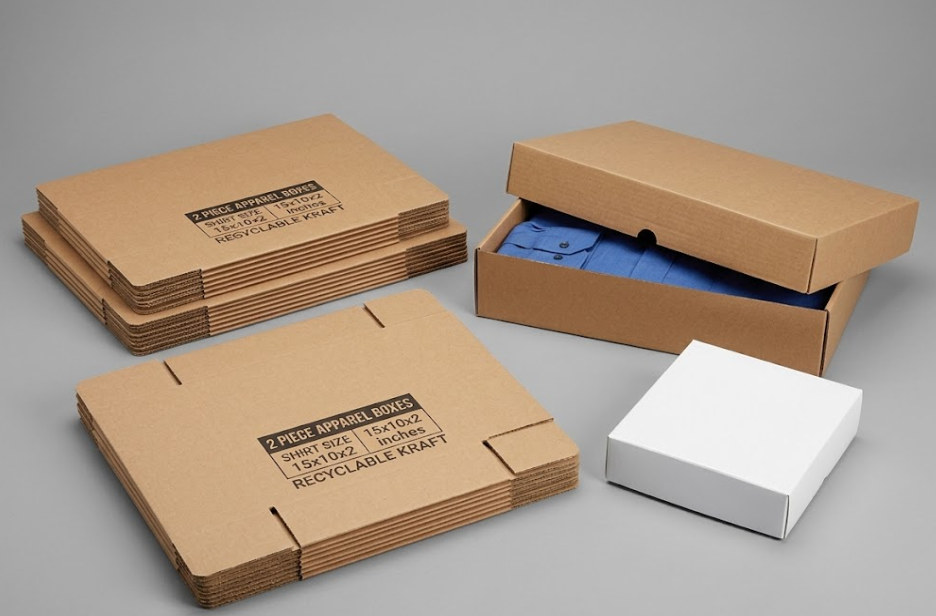
Warning Signs During Early Supplier Evaluation
- The evidence supplied is visually impressive but unrelated to the intended box structure or packed product.
- Important project assumptions remain undefined while the discussion moves directly toward price or production.
- Revised requirements are discussed informally without a clear way to identify the current version.
Evaluate How the Company Handles Samples, Revisions, and Approval
Supplier evaluation becomes much more useful when the buyer examines the approval process, not just the proposed packaging concept.
The important question is not whether a supplier uses a particular universal sequence. Different projects can require different review stages. The important question is whether both sides understand what each stage is intended to confirm.
A visual mockup, for instance, may help with artwork placement and presentation. A physical sample may help answer different questions about fit, opening behavior, product arrangement, and handling. A later production-stage review may address decisions that could not reasonably be confirmed earlier.
These stages should not be treated as interchangeable.
Before committing to production, buyers should clarify four things.
First, identify the review object. Determine whether the next approval concerns a drawing, digital presentation, print-related proof, structural sample, decorated sample, or another project-specific item.
Second, define the decision attached to that review. A review should have a purpose. If the buyer does not know what is being approved, an approval message can create ambiguity later.
Third, record requested revisions clearly. Changes to dimensions, artwork placement, orientation, wording, structure, internal arrangement, or presentation requirements should be tied to an identifiable version rather than relying only on memory or scattered messages.
Fourth, state what remains unverified. Approval of one stage should not be interpreted as automatic approval of characteristics that the stage could not demonstrate.
This creates a traceable decision chain:
Project brief → evidence review → defined revision → updated version → stage-specific approval → remaining verification.
The chain is valuable because packaging development often contains interconnected decisions. A change that appears minor in one context can affect another part of the package. Changing the packed product orientation, for example, can influence the required internal arrangement and the way the product is presented when the box opens. A branding change can affect more than one visible panel.
Version clarity therefore becomes a supplier-evaluation criterion in its own right.
A buyer does not need an elaborate software system to achieve this. What matters is being able to answer simple questions: Which version is current? What changed? What was approved? What is still open?
Compare Box Packaging Companies on a Consistent Evidence Basis
Supplier comparisons become unreliable when each company is evaluated using different assumptions.
One company may quote from a rough description. Another may request dimensions. A third may base its proposal on an existing reference structure. The resulting prices and proposals may look comparable even though the underlying project definitions are not.
A more controlled comparison evaluates each prospective supplier against the same evidence categories.
1. Documented relevance of packaging scope
Does the supplier show documented work in packaging categories that are reasonably connected to the intended project?
Do not reward irrelevant portfolio volume. A smaller set of closely related evidence can be more useful than a large collection of unrelated packaging images.
2. Response to the defined project brief
Does the company respond to the actual packed product, intended structure, presentation requirements, artwork needs, and use context?
A supplier that identifies missing information can be easier to evaluate than one that immediately makes broad assumptions.
3. Relevance of the evidence provided
Does the supplier provide examples, drawings, mockups, samples, or other review material that helps answer the project’s real questions?
Evidence should reduce uncertainty. It should not merely make the proposal look more impressive.
4. Clarity of sample and revision steps
Can the buyer understand what will be reviewed, what each review is intended to confirm, how changes will be recorded, and which version becomes the approved reference?
This is particularly important when several stakeholders participate in the project.
5. Clarity about verification boundaries
Does the discussion clearly distinguish documented facts from proposed options and future verification?
A responsible comparison should reward clarity when something is still undecided rather than treating uncertainty as a weakness that must be hidden.

Items to Confirm Before Selecting a Supplier
- Confirm that the company’s documented packaging categories are relevant to the intended project.
- Send the same core project brief to every company being compared.
- Identify which requirements are confirmed and which remain open.
- Request evidence that directly relates to the proposed packaging direction.
- Ask what type of sample, proof, drawing, or mockup may be reviewed for the project.
- Define what each review stage is expected to confirm.
- Keep requested revisions attached to an identifiable version.
- Record which version has been approved by the appropriate decision-makers.
- Separate visual approval from physical or production characteristics that still require verification.
- Compare quotations only after checking whether the underlying assumptions are reasonably consistent.
The most useful supplier decision is therefore not simply “Which company quoted the lowest price?” It is “Which company can be evaluated against the clearest and most relevant body of evidence for this project?”
That approach reduces the risk of making a sourcing decision from broad marketing statements, unrelated portfolio images, or quotations created from inconsistent assumptions.
Within its documented scope, Xiamen Hengxing Color Printing Co., Ltd. is associated with custom paper boxes, rigid gift boxes, paper bags, magnetic closure boxes, drawer boxes, lid-and-base boxes, mailer boxes, paper tubes, and related packaging accessories. Buyers evaluating a relevant custom paper packaging project can share the packed-product details, intended box direction, presentation requirements, artwork needs, and available physical references when opening a project discussion.
Need Custom Eco-Friendly Packaging Boxes for Your Project?
Get factory-direct pricing and technical support from our experts within 24 hours.
Request a Quick Quote