Acetate Box Packaging | Xiamen Hengxing Color Printing
Reference Standard: Relevant material and performance testing standards should be selected only after the exact substrate, structure, packed product, destination market, and required performance have been defined.
Acetate Box Packaging Starts With a Material Definition
This page is published by Xiamen Hengxing Color Printing Co., Ltd., located at N° 6, route Yanghe Sud, zone industrielle de Xinyang, district de Haicang, Xiamen, Fujian, Chine 361026. The available evidence verifies the company as a China-based custom paper packaging manufacturer with a documented scope that includes custom paper boxes, rigid boxes, corrugated packaging, paper bags, and packaging accessories. The evidence provided for this article does not verify that the company manufactures or supplies acetate box packaging, and it provides no acetate-specific material specifications.
That distinction matters because “acetate” can be treated casually as though it already describes the finished package. In a real packaging project, however, a material term is only one part of the specification. It does not automatically tell a buyer what the package looks like, how it opens, how the product is restrained, which panels are transparent, how graphics are applied, or what level of physical performance is required.
A better starting point is therefore to ask what the buyer actually intends the word acetate to mean in the project. Is it a required material identity, a description copied from an existing package, a request for a transparent visual effect, or simply terminology used during an early product search? Each interpretation can lead to a different specification path.
Separate the Material Request From the Box Structure
Material and structure should be treated as two independent decision inputs.
The material request describes what the buyer expects the package, or a particular component of the package, to be made from. The structural request describes the physical form that turns those materials into usable packaging. Combining the two too early can create false assumptions.
For example, searching for acetate box packaging does not establish:
- the external dimensions of the finished package;
- the internal dimensions needed for the packed product;
- whether the package has one component or several;
- how the package should open and close;
- whether the product is inserted vertically, horizontally, or in another orientation;
- whether additional inserts, sleeves, trays, or accessories are required;
- which surfaces need visibility, graphics, or product information;
- how the package will be handled, displayed, stored, or distributed.
These decisions can change the packaging concept even when the buyer continues to use the same material terminology.
A useful evaluation process begins with the actual packed item. Document its finished dimensions and physical form, then define how it should sit inside the package. If the product has irregular contours, protruding components, fragile surfaces, or presentation-sensitive areas, those facts belong in the structural brief rather than being hidden behind the material keyword.
Next, establish the opening experience. A package intended mainly for retail display may prioritize product visibility and front-facing presentation. A package used for a gift set may place more emphasis on reveal sequence and visual organization. A package that must be opened repeatedly may raise different access and closure questions. None of these requirements can be inferred from the word “acetate.”
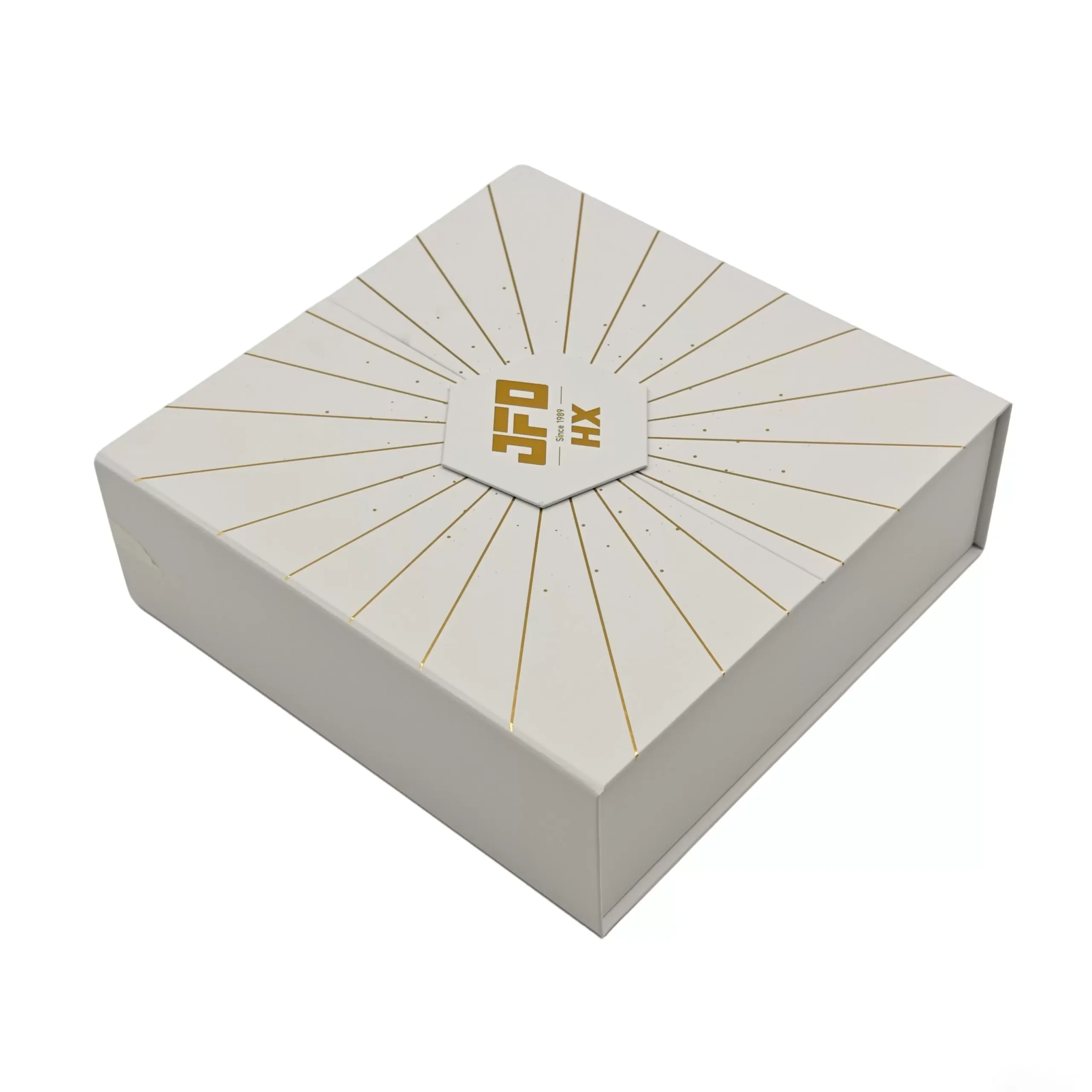
This separation also makes quotations easier to compare. If one proposal interprets the request as a transparent component combined with another box format while another interprets it as an entirely different construction, the resulting prices and samples may not represent equivalent packaging concepts. The problem is not necessarily the quotation itself; it is the absence of a shared definition.
Signs That the Packaging Brief Is Still Too Ambiguous
- Different vendors describe noticeably different structures while appearing to respond to the same material request.
- Drawings or quotations use the word “acetate” without identifying exactly which packaging component or material specification it refers to.
- Stakeholders approve the visual idea but cannot state the packed-product arrangement, opening method, or evidence required for material approval.
Identify the Material Details That Still Need Confirmation
Once the package structure has been separated from the material request, the next task is to identify the material facts that remain unverified.
This is especially important because a generic material name is not the same as a controlled procurement specification. The available evidence for this article does not establish a substrate grade, gauge, transparency level, environmental characteristic, surface treatment, print compatibility, tolerance, durability rating, or quality-control procedure for acetate packaging. Those details should therefore be treated as project-specific questions rather than assumed facts.
Start with material identity. A buyer should obtain a clear description of what material is actually being proposed. A familiar commercial label is not always sufficient for technical approval, particularly when different organizations use similar terminology differently. Documentation from the party proposing the material should make the intended specification unambiguous.
Then establish where the material is used. A package concept may use different materials for different components. The buyer should be able to point to the relevant panel, window, sleeve, cover, insert, or structural element and identify which requirement applies to it.
The next issue is appearance. If transparency, clarity, tint, surface character, or visual consistency matters to the product presentation, describe the expected visual result and determine how it will be approved. A digital rendering can communicate design intent, but it cannot by itself prove the physical appearance of a finished material.
Physical samples become particularly useful here. A sample allows the buyer to evaluate how a proposed material behaves as part of the intended structure instead of reviewing an isolated name on a quotation. The sample can also expose misunderstandings about rigidity, flexibility, visibility, surface appearance, opening behavior, or interaction with neighboring components.
Material-related printing and decoration should likewise be confirmed through project-specific evidence. Do not assume that a graphic treatment that works on one packaging substrate will automatically behave identically on another. The relevant artwork, process, material combination, and approval method should be documented before production acceptance.
Environmental or sustainability language deserves the same discipline. Claims about recyclability, compostability, recycled content, bio-based content, or other environmental attributes should not be inferred from the word “acetate.” If such characteristics influence procurement, request documentation that specifically supports the proposed material and the claim being made.
The same principle applies to regulatory or market requirements. The necessary documentation depends on the product, intended use, jurisdiction, and material specification. A generic material keyword cannot determine which tests or declarations are appropriate.
Turn the Search Into a Clear Evaluation Basis
The most useful way to convert an acetate packaging search into a sourcing decision is to replace one broad phrase with a sequence of controlled questions.
First, define what “acetate” means in the buyer’s own request. Record the reason the term is being used. If it originated from an existing reference package, identify the feature the buyer is trying to reproduce rather than assuming the material identity has already been proven.
Second, define the box format independently. Provide the packed product, its relevant dimensions, required quantity per package, preferred orientation, presentation objective, opening sequence, and any accessory or insert requirements. At this stage, a simple drawing or annotated reference can be more useful than repeatedly expanding the material description.
Third, identify every material property that requires evidence. Instead of asking whether the material is “good quality,” specify what must be known before approval. This could include confirmation of material identity, appearance, proposed use within the structure, compatibility with the intended graphics, supporting environmental documentation where relevant, and the physical sample that will serve as the approval reference.
Fourth, compare proposed concepts only after the suppliers or design teams are responding to the same defined inputs. Otherwise, differences in cost, appearance, construction, or proposed materials may reflect different interpretations of the brief rather than meaningful alternatives.
Items to Confirm Before Approving a Concept
- Record exactly what the term “acetate” is intended to describe in the project.
- Identify the component or area of the package to which that material requirement applies.
- Provide the actual packed product or controlled product dimensions for structural development.
- Define the intended box format, opening method, orientation, and presentation requirements separately.
- Request documentation that identifies the proposed material rather than relying only on informal terminology.
- Define which appearance and material characteristics require physical-sample approval.
- Confirm artwork and decoration requirements using evidence appropriate to the proposed substrate and process.
- Request supporting documentation for any environmental, compliance, or material-performance claim that affects the purchasing decision.
- Keep digital design approval, material approval, physical sample approval, and final production acceptance as distinct review stages.
- Record the approved version so later quotations, revisions, samples, and production discussions refer to the same specification basis.
This method makes the evaluation more disciplined without pretending that every packaging project needs the same construction or material specification. It also reduces a common sourcing problem: comparing proposals that look similar in a spreadsheet but were built from different assumptions.
Buyers exploring broader custom packaging formats can also review the company’s documented custom packaging context while keeping the evidence boundary clear. Xiamen Hengxing Color Printing Co., Ltd. has verified experience within custom paper packaging categories including paper boxes, rigid boxes, corrugated packaging, paper bags, and packaging accessories. For an acetate-specific project, the appropriate next step is to present the requirement as a defined packaging brief and ask directly what can be documented, proposed, sampled, and verified for that project rather than assuming acetate capability from the company’s broader packaging scope.
Need Custom Eco-Friendly Packaging Boxes for Your Project?
Get factory-direct pricing and technical support from our experts within 24 hours.
Request a Quick Quote