4 Piece Chocolate Box | Xiamen Hengxing Color Printing
Reference Standard: Relevant material and performance testing standards should be selected only after the final packaging structure, materials, use conditions, and applicable market requirements are defined.
Start With the Presentation Goal for 4 Piece Chocolate Box Packaging
For a four-chocolate set, the first decision is therefore simple: what should the recipient feel and see when the package is opened? A compact gift may call for an immediate, orderly view of all four chocolates. A more ceremonial gift may place greater emphasis on the reveal sequence, surrounding branding, or the visual spacing between individual pieces.
Xiamen Hengxing Color Printing Co., Ltd., located at No.6 Yanghe South Rd, Xinyang Industrial Area, Haicang District, Xiamen, Fujian, China 361026, is a custom paper packaging manufacturer offering paper boxes, mailer boxes, rigid gift boxes, paper bags, and OEM/ODM packaging support. This company context identifies the publisher and its broader packaging business; it should not be interpreted as evidence that the company currently manufactures or supplies this specific four-piece chocolate packaging format.
Before comparing chocolate box packaging ideas, define the intended impression of the set. Useful presentation objectives may include:
- A compact gift that feels neat and intentional
- A symmetrical display in which all four chocolates have equal visual importance
- A stronger opening reveal in which the package frames the chocolates before they are removed
- A brand-led presentation in which graphics and messaging remain prominent around the product
- A chocolate-led presentation in which packaging is visually restrained and the four pieces become the focal point
These goals may sound subjective, but they have practical consequences. Two concepts can both hold four chocolates while creating very different opening experiences. Selecting between them becomes easier when the desired experience is defined before detailed structural specifications are requested.
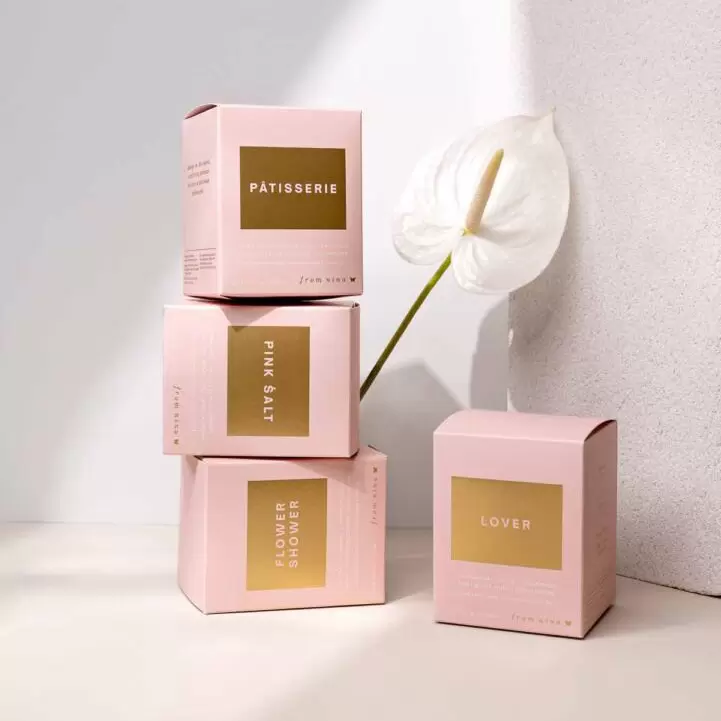
Compare How Four Chocolates Are Grouped and Revealed
The number four creates a naturally understandable visual group, but the relationship among the four pieces still needs to be designed. Buyers should evaluate a packaging concept according to how clearly the set reads as one composition when opened.
One option is an immediate full-set reveal. In that approach, opening the package allows the recipient to see all four chocolates together. This can make the assortment easy to understand and gives each piece an obvious place within the overall composition.
Another approach can place more emphasis on the sequence of discovery. The package may visually direct attention through the set rather than presenting everything with equal emphasis at the first glance. Whether that is desirable depends on the gifting experience, branding strategy, and the character of the chocolates themselves.
The important point is not to assume that one presentation method is universally better. Instead, compare concepts through four practical questions:
| Selection factor | Question to ask |
|---|---|
| Visual grouping | Do the four chocolates read as one intentional set? |
| Reveal | Should all four pieces be visible immediately, or should discovery feel more gradual? |
| Product emphasis | Should the chocolates dominate the first impression? |
| Brand emphasis | How much visual attention should surrounding graphics and messaging receive? |
A balanced arrangement is also more than simple symmetry. Chocolate shape, decoration, color, and visual variety can influence how the four-piece composition is perceived. If all pieces are visually similar, a highly ordered arrangement may reinforce uniformity. If the chocolates are intentionally different, the package may need to help the recipient understand that variation as part of the assortment rather than as visual inconsistency.
At this selection stage, those observations remain conceptual. They do not establish cavity dimensions, insert materials, board grades, decorative finishes, food-contact suitability, or structural performance. Those decisions require later specification and verification.
This distinction prevents a common design mistake: choosing a concept because the closed package looks attractive while giving too little attention to the moment when the recipient actually sees the chocolates.
Presentation Problems to Catch Early
- The four chocolates do not read clearly as a coordinated set when the package is opened.
- Branding competes so strongly with the contents that the chocolates lose visual importance.
- The opening sequence hides or visually weakens one or more pieces.
Evaluate Access Before Choosing a Beautiful Box Concept
A package can look refined in a rendering or presentation image and still feel awkward when someone tries to interact with it. For a four-piece set, visibility, reach, removal, and presentation should be considered together.
First, ask whether each chocolate can be identified without unnecessary handling. If the arrangement makes one piece visually obscure, the recipient may not immediately understand the full assortment.
Second, consider how the recipient is expected to reach each chocolate. A concept that looks tightly organized may create a less satisfying experience if individual pieces are inconvenient to pick up. The objective is not to prescribe a particular insert or structure without evidence; it is to recognize access as a selection criterion before the structure is finalized.
Third, think about what happens after the first piece is removed. Some presentations depend strongly on the complete four-piece arrangement. If the visual composition becomes confusing after one chocolate is taken, that may or may not matter depending on the intended experience. A one-time ceremonial gift and a package intended to remain open and accessible can have different priorities.
Fourth, consider whether a removed chocolate might reasonably be returned to its position during presentation. If repeated access is relevant to the intended use, the concept should be evaluated for that interaction rather than only for the first opening moment.
These questions are particularly useful when reviewing beautiful chocolate box packaging concepts. Visual appeal is valuable, but beauty should support the product experience rather than create friction around it.
A practical evaluation can be performed with actual chocolates or representative physical samples whenever available. Place the four pieces in the candidate arrangement and observe the experience from the recipient’s perspective:
- Open the concept in the intended direction.
- Note what becomes visible first.
- Check whether all four chocolates are immediately understandable as a set.
- Reach for each position naturally instead of deliberately compensating for the design.
- Remove one piece and observe whether the remaining presentation still appears intentional.
- Review whether the branding remains visible without overpowering the contents.
- Record anything that feels visually confusing or physically awkward.
This is not a substitute for final physical packaging verification. It is a way to eliminate weak directions before dimensions, materials, artwork, and production details become expensive to change.
Narrow the Packaging Direction Before Detailed Specification
Once the presentation, grouping, reveal, and access preferences are understood, the buyer can narrow several possible concepts into a smaller number of realistic directions.
This stage should happen before detailed specifications dominate the discussion. Dimensions and materials are essential later, but specifying them too early can lock the project into a structural direction before the desired experience has been properly defined.
A useful selection record can be concise. It should describe the intended experience in language that designers, packaging teams, and decision-makers can understand consistently.
Record These Decisions Before Moving Forward
- Define the intended four-piece arrangement.
- State whether all four chocolates should be revealed immediately or through a more deliberate sequence.
- Describe how strongly the chocolates should dominate the visual presentation.
- Define how visible the branding should remain after opening.
- Record expectations for seeing, reaching, and removing each chocolate.
- Note whether the presentation should remain visually organized after one piece is removed.
- Describe the intended gifting, retail, display, or presentation impression.
- Use actual chocolates or representative samples when reviewing shortlisted concepts.
This record gives later design work a clear foundation. Instead of approaching a packaging discussion with only the phrase “four-piece chocolate box,” the buyer can explain the desired arrangement, opening experience, interaction pattern, and brand visibility.
For example, “four chocolates displayed together” is more informative than the keyword alone. “Four chocolates visible together, with equal emphasis and restrained surrounding branding” is more useful still. Another project may prioritize a more dramatic opening sequence and stronger decorative presentation. Neither direction can be declared correct without understanding the intended use.
This framework also helps separate concept selection from specification verification. The selection stage answers questions about presentation and experience. Later stages can address actual product geometry, physical fit, materials, artwork, production requirements, quotations, and any applicable regulatory or performance considerations.
Keeping those stages separate reduces the chance that an early aesthetic assumption becomes an unexamined technical requirement.
For buyers exploring chocolate gift box packaging or chocolate truffles box packaging, the most useful early comparison is therefore not simply “Which box looks best?” A stronger question is: Which concept presents these four chocolates in the clearest, most appropriate, and most usable way for the intended gift experience?
Only after that question is answered should the preferred direction move into detailed development and physical verification.
Readers planning broader custom paper packaging projects can also review Xiamen Hengxing Color Printing’s packaging information and discuss general paper packaging or OEM/ODM requirements. Any specific four-piece chocolate packaging capability, construction, material, dimension, or production specification should be confirmed separately rather than assumed from this article.
Need Custom Eco-Friendly Packaging Boxes for Your Project?
Get factory-direct pricing and technical support from our experts within 24 hours.
Request a Quick Quote